
How To Prepare A Child For Preschool

Getting a child ready for preschool is a pretty exciting milestone. It’s common for parents to wonder what “preschool ready” truly means. Spoiler alert, it’s not all about knowing numbers or reciting the alphabet. My experience with this transition has shown me it’s usually more about building independence, supporting social skills, and helping kids feel confident stepping into their first group setting.
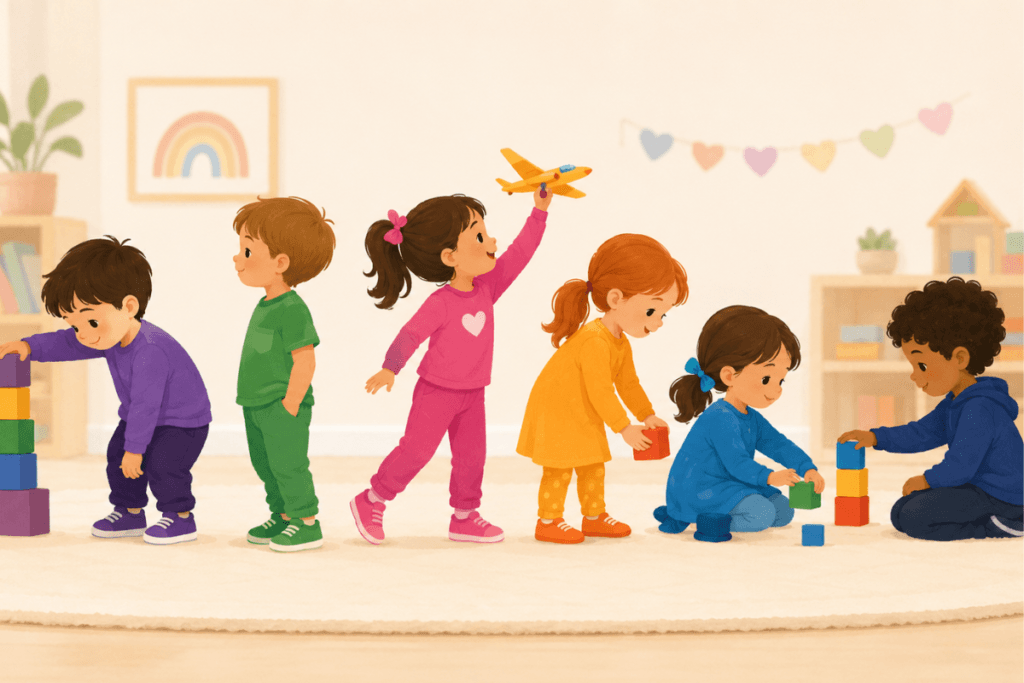
What Does “Preschool Ready” Actually Mean?
So many people think preschool readiness is about skills like reading, counting to 100, or reciting colors perfectly. In reality, most preschools aren’t looking for academic rockstars. They’re looking for kids who show signs of independence, curiosity, and the ability to communicate their needs.
I’ve seen that preschool teachers get most excited about kids who can manage simple tasks themselves, express what they need, and show interest in trying new things. It’s really about:
- Independence: Attempting to dress themselves, wash hands, and tidy up after activities.
- Communication: Being able to use words or gestures to get help, ask questions, and follow basic directions.
- Emotional Regulation: Handling feelings like frustration and disappointment in ways that don’t disrupt the group.
- Curiosity & Willingness: Showing excitement to learn new routines, play with others, and try activities, even if there are a few hesitations at first.
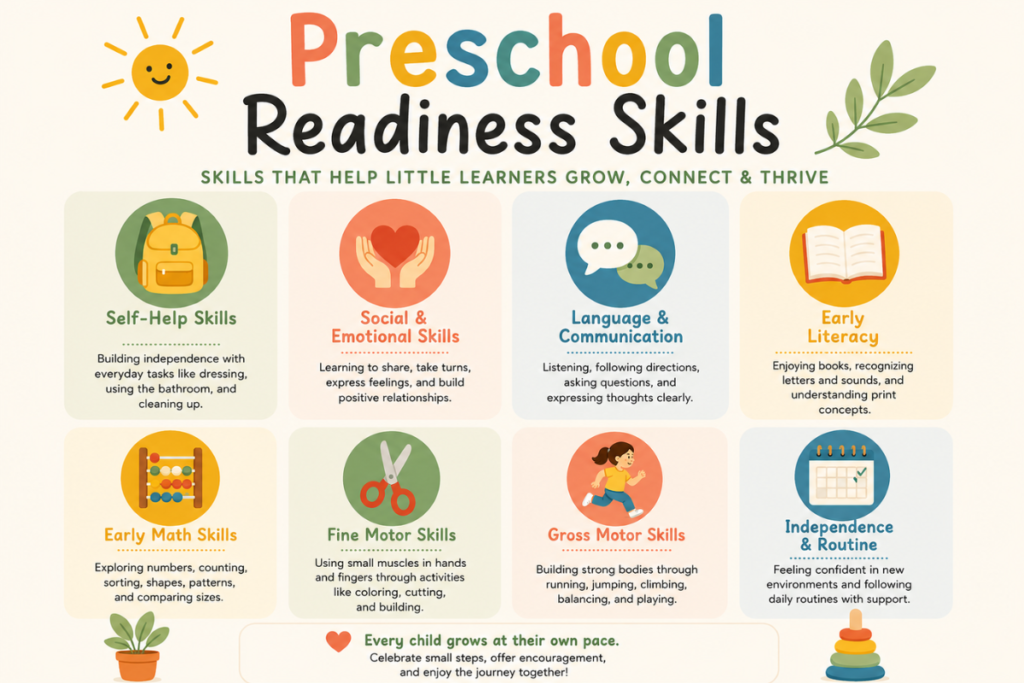
Self-Help Skills Every Preschooler Should Practice
Self-help is probably the number one super useful skill area before preschool. I focused on these simple things with my own child:
- Washing hands independently (before meals and after the bathroom)
- Using the bathroom with a little privacy, including wiping and dressing themselves
- Putting on and taking off their own coat or sweater
- Opening lunch containers, snack bags, and water bottles
- Cleaning up toys and messes after play
- Drinking from an open cup (not just sippy cups)
Preschool teachers often help kids, especially early in the year, but any progress in these self-help skills goes a long way. To my surprise, it leads to a lot more confidence for kids, too.
Social Skills That Make Preschool Easier
Sharing space and materials for the first time with a bunch of new kids can be overwhelming. I’ve noticed that practicing these social basics at home makes preschool days smoother:
- Taking turns, even with favorite toys
- Waiting patiently (for a snack, a turn, or help from an adult)
- Using simple words like “please” and “thank you”
- Asking for help when stuck instead of melting down quietly
- Introducing themselves or saying hello to new friends
Even if your child is shy, building up these social skills through sibling play, playdates, or even turntaking games builds comfort with group settings. Encouraging friendly greetings in different settings, like the grocery store or park, also helps build social confidence.
Emotional Readiness
I can’t emphasize enough how super important it is for young kids to practice managing big feelings before starting preschool. Emotional readiness for me means:
- Being able to separate from parents, even if there are tears, knowing that a goodbye routine can help
- Handling frustration with some coping strategies, like taking deep breaths or asking for a hug
- Telling adults when they feel sad, hurt, or overwhelmed, instead of acting out
- Following a simple routine, like hanging up a bag or joining a group at circle time
I’ve found talking through feelings, reading books about starting school, and practicing short goodbyes at dropoffs (library time or playgroup) makes a real difference. Sometimes, roleplaying with dolls or action figures can let kids act out feelings and responses, which builds emotional vocabulary and confidence.
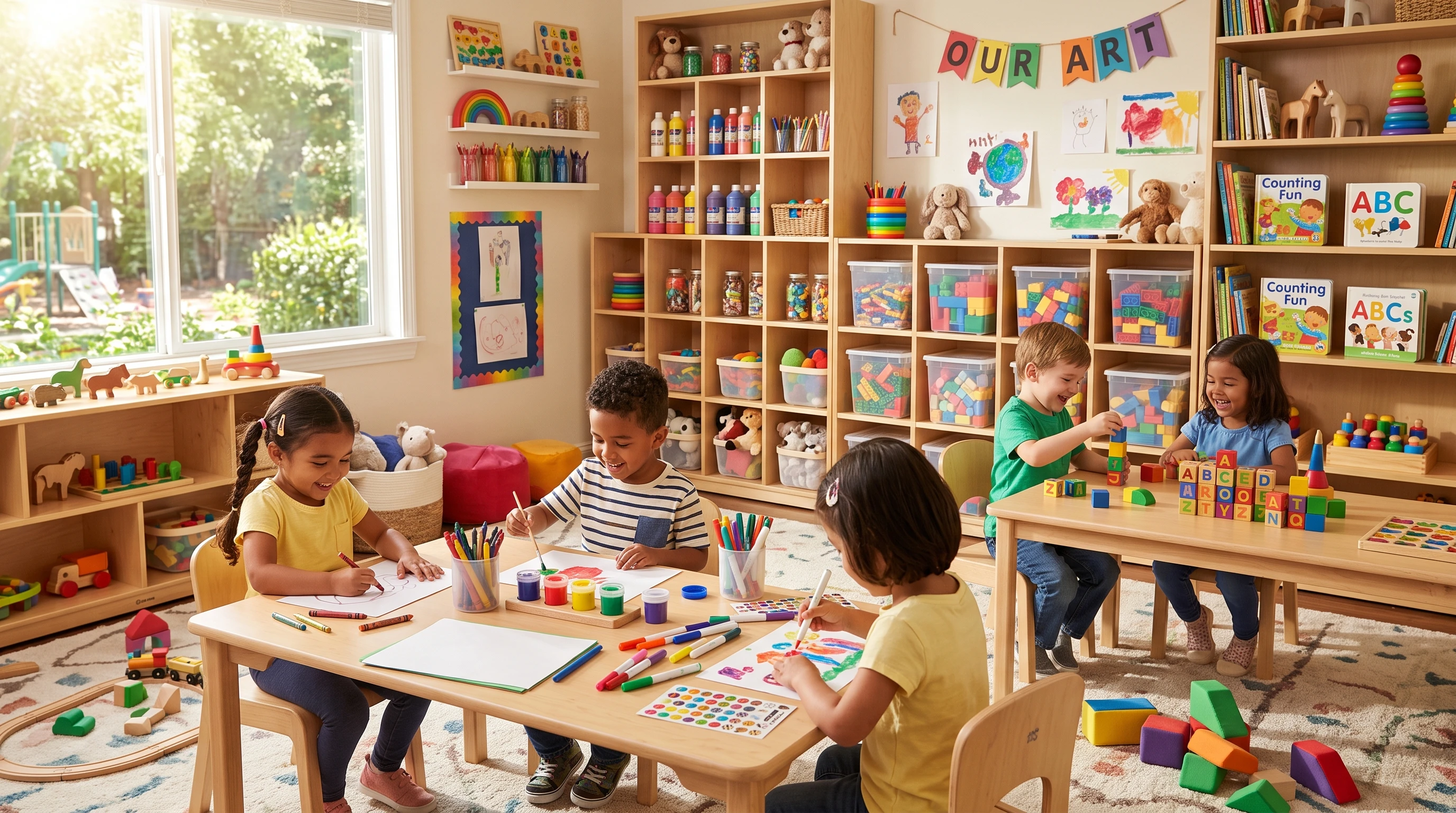
Language and Communication Skills
Your child will have an easier time if they can:
- Follow directions with a couple of steps (“Please put your shoes away and then wash your hands”)
- Ask questions or let adults know when they need help
- Speak clearly enough to be understood, even with typical toddler mistakes
- Listen and respond in short conversations
Preschool isn’t about speaking perfectly or always using full sentences. For my family, narrating daily routines, asking open questions, and pausing to let my kid answer helped a lot with these skills. Another useful tip is to encourage storytelling by asking kids to share what happened during their day or retell a favorite story in their own words.
Early Literacy Skills
No reading required here! Early literacy looks like:
- Looking at books together every day
- Recognizing the letters in their own name (or the whole name, if that happens)
- Enjoying rhyming games or silly rhyming songs
- Holding a book upright and turning pages one at a time
- Showing basic awareness of letters and that print has meaning
Skip the forced flashcards drill. Making reading fun, like pointing out signs, singing the ABCs, and letting your child “read” by telling the story from the pictures, builds a love of books that lasts. You can also visit the library together to pick out new books and create excitement around story time.
Early Math Skills
Kids naturally pick up lots of math basics just by playing. Preschool math skills include:
- Counting objects, even up to five or ten
- Sorting items (blocks by color, socks by size)
- Recognizing patterns (striped vs. polka dot, red-blue-red-blue)
- Comparing sizes (bigger/smaller, taller/shorter)
- Knowing basic shapes (circle, square, triangle)
- Matching one object with one number (“one to one correspondence”)
Everyday play, like counting stairs, stacking blocks, or setting the table, covers so many early math concepts without making it feel like a lesson. Try using snack time to count pieces or compare amounts, or create matching games with kitchen utensils for extra practice.
Fine Motor Skills
Fine motor practice helps kids with classroom tasks, from art projects to snack time. Some super useful activities include:
- Using child safe scissors to snip paper
- Coloring with crayons, pencils, or markers
- Squeezing playdough and shaping it
- Tracing shapes with a finger or pencil
- Pinching tweezers or tongs to pick up small items
- Peeling and sticking stickers
Even picking up small snacks or building with little blocks helps hands get ready for preschool crafts and activities. Simple household activities, such as helping peel an orange or stirring batter, also build hand strength and control for fine tasks.
Gross Motor Skills
Moving, climbing, and playing outside don’t just burn energy. They actually prep kids for group games and structured play at school by building:
- Hopping on one foot
- Running without bumping into things
- Jumping with both feet
- Climbing up ladders or playground equipment
- Balancing on a line or low wall
- Throwing and catching a ball
Kids develop these skills at their own pace. The key is giving them chances to move and explore each day. Playful competition, obstacle courses in the backyard, or dance parties inside all help pump up these important abilities while having fun.
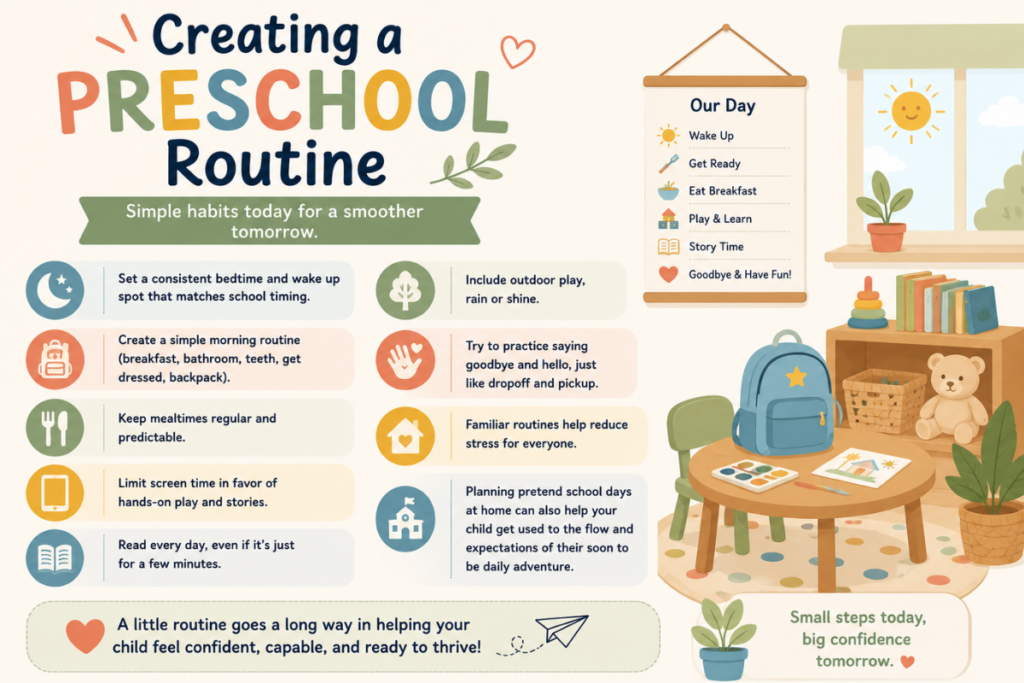
Creating a Preschool Routine
Life gets much smoother when you start switching up your little one’s schedule to match the preschool day. Here are a few simple ideas I found very helpful:
- Set a consistent bedtime and wake up spot that matches school timing
- Create a simple morning routine (breakfast, bathroom, teeth, get dressed, backpack)
- Keep mealtimes regular and predictable
- Limit screen time in favor of hands-on play and stories
- Read every day, even if it’s just for a few minutes
- Include outdoor play, rain or shine
Try to practice saying goodbye and hello, just like dropoff and pickup. Familiar routines help reduce stress for everyone. Planning pretend school days at home can also help your child get used to the flow and expectations of their soon to be daily adventure.
What NOT to Worry About
Parents like me often worry more than kids when it comes to transitions. Here are some things you really don’t need to stress about:
- Your child isn’t reading yet. That’s totally normal.
- Writing is scribbly or sometimes backwards
- They can’t sit quietly for long periods
- They don’t always know every color or number
- Mistakes and messes. These are how kids learn best.
Preschools expect a wide range of abilities. Focusing on your child’s interests and growth over perfection takes a lot of pressure off everyone. Let your child’s questions and curiosity lead the way without constant correction or stressing about milestones.
Simple Preschool Activities You Can Start Today
Getting ready for preschool is as easy as playing together. Here’s what I recommend for boosting confidence and practical skills all at once:
- Doing puzzles, great for matching and problem solving
- Reading together every day
- Squishing, rolling, or cutting playdough
- Pretend play with dolls, stuffed animals, or a toy kitchen
- Sorting socks or toys by color, size, or type
- Drawing with sidewalk chalk outside
- Taking nature walks and noticing bugs, rocks, or leaves
- Cooking simple snacks or meals together, like making sandwiches or stirring batter
Having fun and trying new things together is the best preschool prep around. I always remind myself: progress counts more than perfection and readiness grows with practice, patience, and encouragement. Take your time, enjoy the ride, and celebrate every little step forward as your child sets off for this nextlevel cool adventure.